
Chocolate Facts Worth Savoring
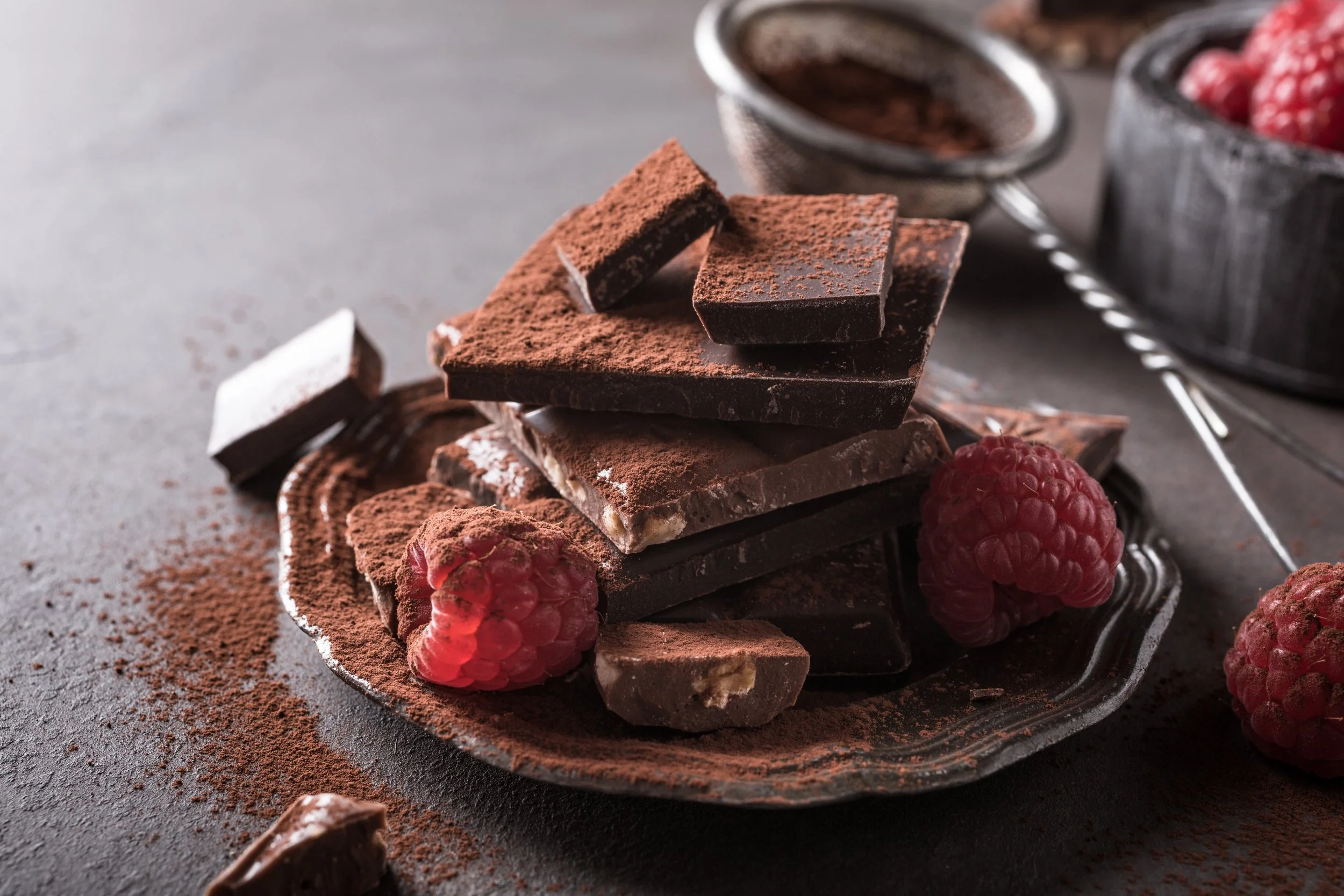
Aim for 70% or higher: Higher cocoa content means more flavanols and less added sugar—but also a more bitter taste.
Dark chocolate is energy-dense: With about 150–170 calories per ounce, dark chocolate delivers a lot of energy in a small amount. The good news? It can promote satiety and satisfaction, so a small portion is often enough to feel content.
Yes, there’s caffeine—but not much. Dark chocolate contains caffeine, but far less than coffee. One ounce typically provides 20–30 mg or less.
Milk and white chocolate don’t offer the same benefits. They contain much less cocoa and significantly more added sugar and fat.
Organic chocolate. Indicates fewer pesticides and synthetic fertilizers, but doesn’t necessarily mean higher antioxidant content.
Fair Trade matters: Fair Trade certification supports ethical labor practices and helps reduce child labor in cocoa farming.
Bottom Line: Dark chocolate can absolutely be part of a nourishing, enjoyable eating pattern—especially when chosen mindfully and savored. Think quality over quantity, and let chocolate be a pleasure and a perk.